
December 2023 Update:
Admitting there is a problem, without developing a plan to fix it, is essentially giving up.
An astonishing thing happened. At the November 6th, 2023, Annual Diversity and Inclusion Symposium, Derek Moss, the Assistant Commissioner for the CCG’s Western Region, made a number of general admissions in relation to the bullying and harassment that has and is taking place within the CCG organization.
To be fair, we were not at the symposium, and have only a general understanding of what went on. To help clarify matters, we have sent in ATIP requests to obtain documents from the symposium and from another earlier meeting that took place in mid-October. We did however form some take away opinions about what went on.
The first take away is that Derek’s comments at the symposium lead us to believe that some senior managers at the CCG are finally catching on to the issues associated with the systemically entrenched bullying and harassment that is going on under their command.
An earlier meeting took place in mid-October. Derek also attended this meeting, but it was called by the new guy on the block, Chris Henderson the Deputy Commissioner of Operations, et al. At this meeting Chris, Derek and Sue Pickrell were given a host of examples by participants of how bad peer on peer harassment and bullying was within the CCG at the impromptu meeting they called in mid-October to ‘check in’ with a dozen or so Western women members after the ‘Atlantic incident’. They lost plausible deniability at that meeting.

They heard about the seriousness of these issues, and the ball was in their court. Something had to be done. During the interval between that mid-October meeting and the symposium in early November, it sounds like senior management and possibly the HR Unit did at least think about things. We say this as Derek peppered his comments to those in attendance at the symposium with the following themes: “Our zero-tolerance policy is a piece of shit”. “The Union won’t let us deal with this issue as it protects harassers”. “There is too much HR red tape, and our hands are tied when it comes to dealing with these guys.”
What a total ‘buzz kill’. Given the likely demographic of those in attendance, Senior management’s messaging in relation to these significant issues must have gone over like a lead balloon. Way to go in reading the room.
This leads to our second take away: “Ladies, your management team is telling you they have thought about the issues and given up when it comes to dealing with them.”
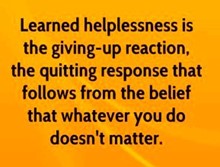
When organizational leadership has a learned helplessness leadership style, it has a negative impact on the whole organization’s performance and morale. Learned helplessness in a management team leads to low motivation levels, low expectations of success, less persistence, and not asking for help. Learned helplessness is a managerial philosophy that values the comforts of knowable stagnation over thoughtfully led change engaged in with others both inside and outside of the organization.
Learned helplessness is a systemic manifestation of a toxic workplace culture. Where issues are perceived as insurmountable, the routine fallback position for organizational culture is to lock the doors, draw down the window blinds and finger point or offload responsibly on lower members trapped inside. When not avoiding or being willfully blind to what is going on, managers with this mindset revert to blaming the victims for what they did or did not do to while being bullied or harassed. You should have done this. You should have done that. They hide from and shed responsibility for bringing about change rather than leading from the top. Lastly, an organization with this type of leadership culture becomes a place where those who ‘complain’ about favored members are kicked out of the home or repeatedly sent off to their rooms where they are left to indefinitely languish on their own. Eventually, many of disintermediated ‘complainers’ leave, to the dysfunctional family’s huge relief. Does this managerial style and these patterns sound familiar?

We believe that senior CCG management and their HR unit failed to come up with any solid plans and solutions after the October meeting. If true, both a remarkable problem-solving deficit and lack of engagement are at play in Senior CCG management.
This leads us to our final take away for this update. It is this: CCG leadership and their HR Unit are unwilling and/or unable to change or seek help to address these issues. We are going to have to do it. If they feel disinterested in or incapable of addressing inappropriate behavior, we will seek a remedy under Dana’s complaint (with the Canadian Human Rights Commission) that will require them to do so, if successful.
By this we mean to do our best to drag them kicking and screaming all the back way to normal functionality. In our view the CHRC has the expertise and is the best forum for addressing these types of issues head on to prompt change. During the investigation we will be asking the CHRC to examine the various manifestations and effects of the toxic culture of the CCG as a matter of public interest.
We continue to submit ATIPs, collect evidence and fill out our witness lists during this time. We are doing more than thinking negatively about things and being overwhelmed with various showstoppers. We remain committed to seeking a remedy that will require the CCG Executive and their HR team to develop a plan, with oversight from the CHRC, to address its systemic issues and remediate workplace policies and processes in relation to peer on peer harassment and bullying.
No learned helplessness over here. We continue to actively work on this. And we chose to remain positively hopeful.